The cultivation of corn (maize)
(Zea mays ssp. mays) began over
8,000 years ago in Mesoamerica,
a geographical area which
includes central and southern
Mexico, and Central America.
Corn was first domesticated from
teosinte (Zea mexicana), an
annual grass native to this
region. Wild teosinte mostly has
value as a fodder plant, as it
provides very little edible
seeds.
The first archaeological
evidence of domesticated corn
comes from the San Marcos cave
in Tehuacan and the Guilá
Naquitz cave in the state of
Oaxaca, Mexico. The corn in San
Marcos cave is dated to over
5,000 years ago. The cobs from
the Guilá Naquitz cave were
dated to over 6200 years old.
Home gardeners who want to grow
corn may choose from several
different varieties including
popcorn, dent corn, flint corn,
pod corn, and sweet corn. Here
we’ll focus on growing sweet
corn as it is the most popular
for the home gardener.
Yes,
‘Bhutta’
or
‘Makkaai’
in Hindi is the roasted
corn on cob. When the first rain
indicated the onset of
Monsoons in India, I
would eagerly look forward for
delicious treat. The sight of
corn vendor or
Bhuttawalah with
his wooden cart stocked high
with fresh corn and a small coal
stove would make my taste buds
tingle and eyes twinkle. Parked
on road side, beaches, cricket
play grounds, school/collage
gates, this corner, that corner,
every nook and corner would
become the center of frenzied
activity as theBhuttawalah’s lured
the passers-by with the
delicious roasted aroma of
Bhutta
being roasted on open
charcoal stove. The smell of the
fresh roasted corns is so
enticing that people are drawn
to the cart to pick and choose
the
Bhutta.
Sweet corn is one of the
most popular summer vegetable
crops grown in India. Like
peppers, pumpkins, squash and
beans, sweet corn is native to
the New World where it has been
cultivated for more than 4,000
years. Sweet corn is a monecious
plant, which means it has a
separate male and female flower
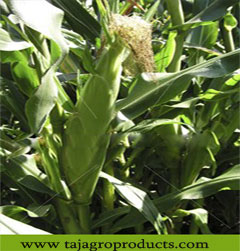
on each stalk. The tassel is the
male flower, which produces the
pollen, and the ear is the
female flower (Figure 1). For
kernels to form on each ear,
pollen from the tassel must be
deposited on the silk of the
ear. Sweet corn is wind
pollinated, although bees are
often seen collecting nectar and
pollen from the tassels. For
small plantings of sweet corn, a
series of short rows rather than
a single, long row will improve
the chances for efficient
pollination. Sweet corn
typically produces one or two
ears per plants.
Sweet
Corn Varieties
There are three main types of
sweet corn available:
Sh2, (supersweet),
SUSU (normal sugary),
and
SESE (sugary enhancer).
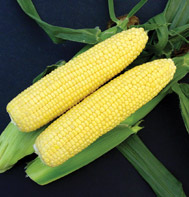
Sweet corn can also be
classified by its color: white,
yellow, or bi-colored.
Supersweet corn varieties have
firm kernels and are very sweet.
They are typically not as
“creamy” as the other varieties.
Note that supersweet corn is
more susceptible than the other
varieties to cross-pollination
and may loose its flavor if
grown too close to other non-supersweet
corn crops. Normal sugary corns
are creamy and sweet and very
popular with gardeners. They do
not store well after harvesting,
and should be eaten within a
couple of days. Sugary enhancer
varieties have a smooth and
buttery texture. For flavor,
texture, and ease of growing,
this is the best variety.
Where
and When to Plant
Plant your corn in full sun and
well after any risk of frost.
Your corn should receive at
least eight hours of sunlight a
day. Soil temperatures should be
about 60 degrees F for proper
germination, and slightly higher
for the supersweet varieties.
Generally, May and June are good
months to plant. You can check
your soil temperature with an
electronic soil tester if you
have any doubts. If you want an
early start on your corn, you
can consider covering your soil
with a plastic mulch, such as
clear or black polyethylene, to
help warm the soil and promote
germination.
When you’re looking for a place
to plant your corn, you should
keep in mind that it’s important
to separate different corn
varieties as they may cross
pollinate. Additionally, keep an
eye out for other people in your
area who are growing corn. Corn
is pollinated by the wind and
can easily be contaminated by
other corn crops. About 300
meters distance between
different corn crops is
recommended.
Harvesting
& storage Tips
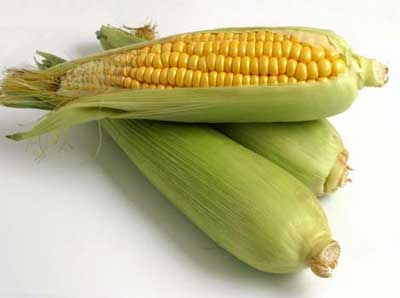
The best time to harvest corn is
known as the “milk stage” when
the ears are fully formed but
not yet ripe. This stage usually
lasts about a week. You can
determine when your corn is
ready to harvest by looking at
the silks, husks, and kernels.
The silks should be brown and
starting to dry, which occurs
about 3 weeks after the silks
first appear. They husks should
hold tightly to the ear and the
kernels should produce a little
milky fluid when pierced.
Supersweets will produce a
clearer liquid. Each stalk of
corn should yield at least one
ear, and sometimes more.
You should harvest your corn in
the cooler hours of the morning.
Remove the ears of corn by
twisting them at the base and
pulling them off. After harvest,
you can remove the cornstalks
and use them as compost
Store your corn in cool
temperatures, usually around 38
degrees F, the cooler the
better. If you wait too long to
store your corn, you risk
changing the flavor and reducing
quality, as sugars begin to
convert to starch almost right
away in the kernels. You can
cool your corn by resting it in
crushed ice or placing in a
container with ice water. After
cooling, place your corn in
plastic bags with a few small
holes punched in them, and then
in the refrigerator for storage.
Depending on the variety, it is
best to eat your corn within a
few days after harvest
THE AGRICULTURAL AND PROCESSED FOOD PRODUCTS
EXPORT CESS ACT, 1985 NO. 3 OF 1986 PUBLISHED VIDE
NOTIFICATION NO. 3 DT. 8TH JANUARY 1986 HAS BEEN
REPEALED VIDE MINISTRY OF LAW AND JUSTICE NOTIFICATION
NO. 26 DT. 2ND JUNE 2006 UNDER THE CESS LAWS (REPEALING
AND AMENDING) ACT, 2006.

 Sweet Corn Prices